

Learning a new language has never been more accessible. With just a smartphone, you can access interactive lessons, pronunciation tools, vocabulary games, and structured curricula — all built to help you study in minutes a day.
But with dozens of apps competing for your attention, finding the right one can be overwhelming. Do you need something free and fun? A structured program focused on grammar and conversation? Or an immersive experience that trains your pronunciation?
Duolingo
Start for free. Gamified lessons. 40+ languages. Perfect for building a daily habit.
Babbel
Organized lessons. Real-life conversations. Grammar support. 14 languages available.
Rosetta Stone
Immersion-based. TruAccent speech tech. 25 languages. Visual and context-driven.
Duolingo — The Most Accessible Language Learning App
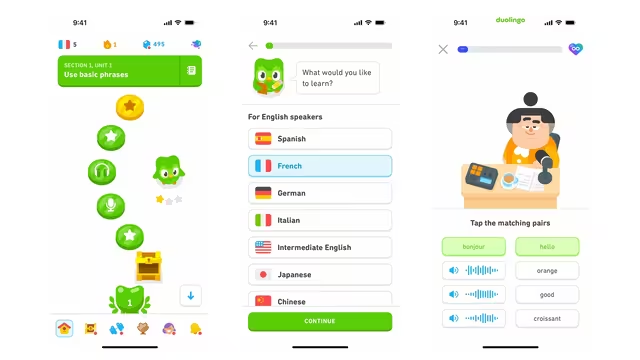
Duolingo is one of the most popular language learning apps in the world. It uses a gamified approach — with points, streaks, levels, and daily challenges — to turn learning into a routine rather than a one-time activity. According to Duolingo, the platform offers more than 280 courses in over 40 languages, along with other educational content such as math, music, and chess.
Its most attractive feature is accessibility: the core language courses are available completely free, making it an ideal starting point for anyone who wants to explore a new language without paying upfront.
✅ Key Strengths
- Fun and motivating: Streaks, levels, and XP points keep users coming back daily.
- Free to start: You can learn core content without paying anything.
- 40+ languages: One of the largest language libraries in any app.
- Bite-sized lessons: Each session takes just a few minutes.
- AI-powered personalization: Adapts to your pace and skill level, with additional AI features in paid tiers.
⚠️ Things to Consider
- Not a full replacement for real conversation practice or deep grammar study.
- Gamification can lead some users to focus more on scores than actual fluency.
- Advanced learners usually need supplementary resources.
- Free version includes ads and has some usage limits.
Babbel — Real-Life Conversations and Organized Courses
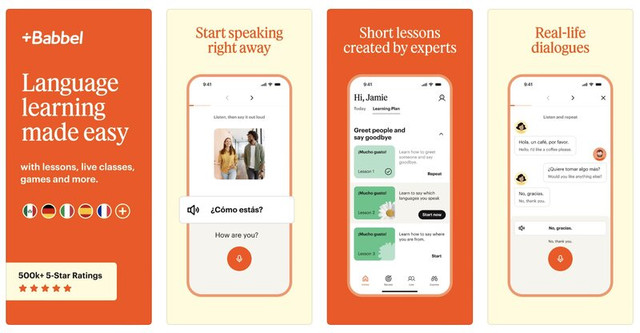
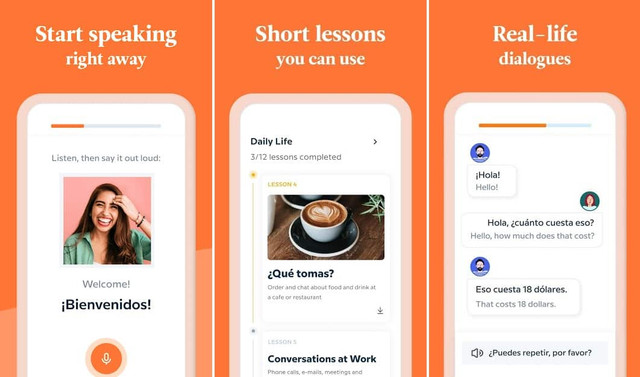
Babbel takes a different approach from Duolingo. Instead of leaning heavily into gamification, it focuses on well-organized lessons that help users apply the language in everyday situations. The platform currently offers courses in 14 languages, including English, Spanish, German, French, Italian, Portuguese, Swedish, Turkish, Dutch, and more.
Babbel also covers topics like travel, grammar, culture, and daily communication, supported by vocabulary review tools and audio-based practice. This makes it especially useful for learners who want something more guided, practical, and methodical.
✅ Key Strengths
- Clear curriculum: Lessons follow a structured path — not random topics.
- Real-life focus: Content centers around phrases and situations you will actually use.
- Grammar integration: Rules are explained inside lessons, not just through repetition.
- Vocabulary review: Built-in tools help reinforce what you learn over time.
- Cross-device sync: Use on phone, tablet, or desktop with progress saved.
⚠️ Things to Consider
- Not a fully free platform — a subscription is required for full access.
- Only 14 languages — much fewer than Duolingo or Rosetta Stone.
- Course depth varies between languages — some go further than others.
- Less game-like motivation compared to Duolingo.
Rosetta Stone — Learn Through Context, Not Translation
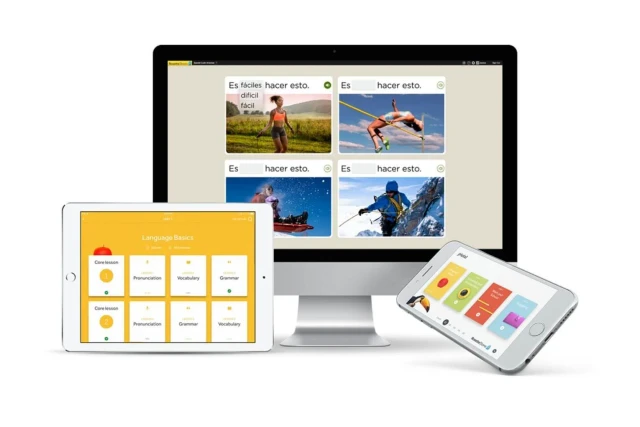

Rosetta Stone is one of the most established names in language education, and its core philosophy is immersion. Instead of translating every word back to your native language, the platform uses images, context, and repetition to help you associate words and phrases directly with the language you are learning.
Rosetta Stone currently offers access to 25 languages under certain plans, including Arabic, English, French, Spanish, German, Italian, Japanese, Chinese, Korean, and more. Additional features include Learning Path, Chat Missions, Flashcards, and Sapphire Studio, alongside its well-known TruAccent pronunciation engine.
✅ Key Strengths
- True immersion method: Learn through images and context, reducing dependence on translation.
- TruAccent pronunciation: Speech recognition gives instant feedback to improve your accent.
- 25 languages: Some plans include all languages with the ability to switch freely.
- Rich supplementary tools: Learning Path, Chat Missions, Flashcards, and more.
- Trusted brand: Decades of experience in language education.
⚠️ Things to Consider
- Immersion is not for everyone — some learners want direct grammar explanations in their native language.
- Grammar is taught less directly than in traditional systems.
- Pricing can be higher than some competitors, especially without long-term plans.
- Some lessons may feel repetitive for certain learners.
Duolingo vs Babbel vs Rosetta Stone
| Criteria | Duolingo | Babbel | Rosetta Stone |
|---|---|---|---|
| Our Rating | ★★★★☆ 4.5 | ★★★★☆ 4.3 | ★★★★☆ 4.2 |
| Price | Free + paid plans | Paid subscription | Paid subscription |
| Languages | 40+ | 14 | 25 |
| Learning Style | Gamified & interactive | Structured & practical | Immersion-based |
| Pronunciation | Good | Good | Excellent (TruAccent) |
| Grammar | Present but lighter | Strong focus | Less direct |
| Short Lessons | Excellent | Good | Good |
| Beginner-Friendly | Excellent | Excellent | Good |
| Structured Path | Good | Excellent | Good |
| Immersion | Moderate | Moderate | Excellent |
| Free Version | Yes — full core access | Limited / trial | Trial or promo access |
| Best For | Daily habit building | Practical organized study | Pronunciation & immersion |
| Download | Android · iOS · Web | Android · iOS · Web | Android · iOS · Web |
⚠️ Note: Pricing, free trial availability, features, and plan options may change based on your country, current promotions, and subscription length. Always verify on the official websites before purchasing.
Which Platform Is Best in 2026?
There is no single "best" platform for everyone. The right choice depends entirely on your goals, your budget, and the way you learn best.
Choose Duolingo if...
You want to start for free, enjoy short and fun daily lessons, and need the easiest way to build a consistent learning habit.
Choose Babbel if...
You want structured lessons, practical dialogue practice, clear grammar support, and a serious study path for real-life situations.
Choose Rosetta Stone if...
You prefer learning through images and context, want to minimize translation, and care deeply about pronunciation accuracy.
FAQ
Is Duolingo really free?
Yes. Duolingo provides free access to its core language courses. Paid subscriptions like Super Duolingo and Duolingo Max remove ads and unlock additional features, but the fundamental learning content is available at no cost.
Is Babbel better than Duolingo?
It depends on what you need. Duolingo is better for free, gamified daily practice and building a habit. Babbel is better for structured, conversation-focused learning with stronger grammar integration. Neither is universally "better" — they serve different learning styles.
Is Rosetta Stone good for beginners?
Yes. Rosetta Stone works well for beginners who enjoy visual, context-based learning. However, learners who want explicit grammar rules explained in their native language may find it less intuitive than platforms like Babbel.
What is the best app for learning English?
It depends on your priorities. Duolingo is great for daily habit-building and free practice. Babbel is strong for practical English conversations and grammar. Rosetta Stone excels at pronunciation training through its TruAccent technology. Many successful learners use a combination.
Can you become fluent using just one app?
An app can be a powerful part of your learning journey, but achieving true fluency usually requires a combination of tools: app-based lessons, listening to native content, reading, writing, and — most importantly — real conversation practice with other speakers.
Which app has the most languages?
Duolingo leads with 40+ languages. Rosetta Stone offers 25 languages. Babbel covers 14. If language variety is your top priority, Duolingo is the clear winner.
Are these apps available on both Android and iOS?
Yes. All three platforms — Duolingo, Babbel, and Rosetta Stone — are available on Android (Google Play Store), iOS (Apple App Store), and through web browsers on desktop computers.
Final Thoughts
If you are deciding between Duolingo, Babbel, and Rosetta Stone, focus on your goal rather than the brand name.
Duolingo is the best starting point if you want a free, fun, and beginner-friendly way to build a learning routine. Babbel is stronger for structured, practical learning with real conversation skills. Rosetta Stone is the top pick for immersion-based study and pronunciation accuracy.
Remember: the best language app is the one you will actually use consistently. Even the most advanced platform will not help if you quit after two weeks.